

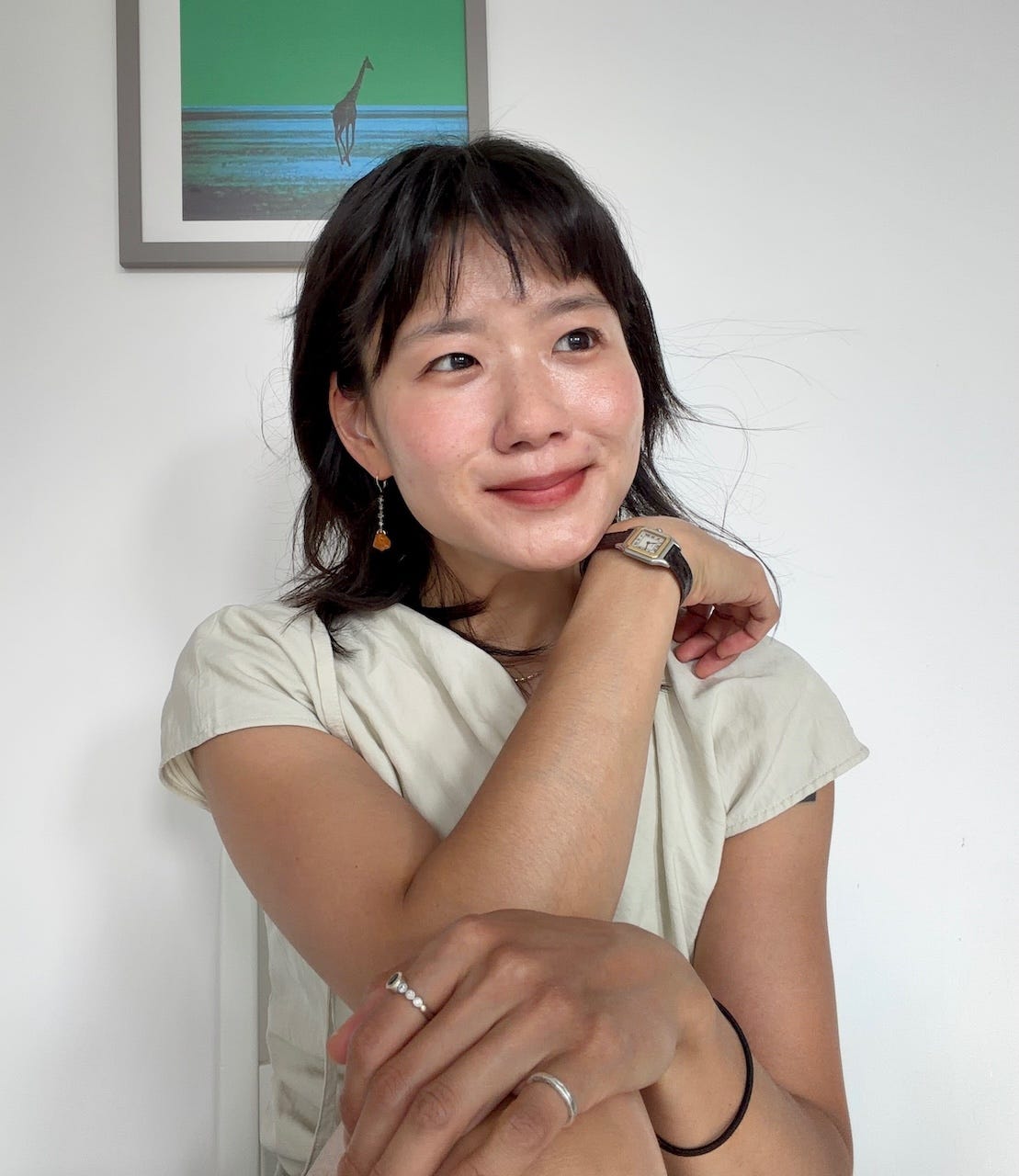
What can you tell us about your poem?
I vaguely remember setting out with the intention of writing an ‘origin story’ poem, one that explores where my loneliness, a certain feeling of always being slightly at the peripheries, came from. This took me back to my time at a boarding school in a sleepy little town in Massachusetts. Loneliness was certainly one of the throughlines I found, and this wasn’t entirely surprising – I was a 15-year-old 10,000km from home, after all. But I was also reminded of the friends I spent much of my time with, who must have been coming of age in their own way, and trying to grapple with their own complex inner lives. I think “New England fragments” ended up being about loneliness, as much as about the mundane moments of co-presence that made these years a bit more bearable for us, even if we might not have recognized them as such back then.
What poets and poems are you in dialogue with?
I’m inspired by how attuned Jenny Xie’s poems are to the observable world and the psychic world at once. Her poetry reminds me that there’s a unique vantage point opened up by solitude and meandering – physical, psychological, and formal. I aspire for the philosophical profundity that Sandra Lim packs into her sparse poems, and her ultra-precise, economical diction. Jean Rhys is particularly brilliant, and inspired me to write my own sparsest poem yet. I’m grateful to have been recently introduced to the work of the late Max Ritvo. I hope to imagine a little more like him and take more confident leaps in the worlds that I build in my poems.
What is your writing practice?
I’m a slow writer who needs words, phrases, or ideas to steep for a while before they find their place in a poem. Most of my poems pool materials that have been sitting in my notebook or my phone notes for weeks, sometimes months. Part of maturing as a writer, I think, was growing more comfortable with the slowness of this process, and periods of quietude. It has helped to set myself challenges (trying to write a poem without an “I”, or a poem inspired by a piece of music, for instance). Over time, though, I think I’ve also come to believe that something is still happening even when a poem is not being brought into existence, so long as I stay ready to receive and am thinking about surprising ways to cast language onto the mundane.
Do you write in other forms? How do you toggle between them?
I spend much of my working day reading and writing academic texts, primarily in anthropology. My poetry was once described as “essayistic”, which might be a quality carried over from my academic writing. Conversely, when I’m working on academic articles, trying to find ways for my arguments to land, I find myself longing for the hesitations and loose knots that poetry permits. But I think toggling between forms can be surprisingly productive, as well. The language in much of academic and theoretical texts are so far from demotic language, but precisely because it is, it can help you think about words in a new light, and laterally across registers, which can definitely kindle the poetic imagination.
“Weak theory” in New England fragments comes from the anthropologist Kathleen Stewart, who builds on Eve Kosofsky Sedgwick’s original formulation. Stewart calls for a kind of theory that attends to the emergent and the ordinary, even if these processes of becoming might not “add up” in a way that is amenable to conventional theorization. I don’t think it’s too much of a stretch to read hers as a call to be a little more poetic in the way we theorize. I think this is just one of the many ways of thinking about the potential synergy between the two forms.
What’s your favourite text about the sea? Or beaches?
I love the mystique and longing in Mark Strand’s Black Sea.
What song helps us get to know you better?
One of my fondest memories associated with music is sitting in the passenger seat in my mom’s car as a child, as we listened to the CDs her friend had burned for her. There were some real gems in these carefully curated tracklists, ranging from trendy dance-pop to heart-wrenching ballads. Listening to these songs over and over again as she drove me around Seoul was probably when I realized that I love music and what it stirs in me. Sky by Loveholic was one of my favorites from these CD’s. My mom and I probably still both know it by heart.