

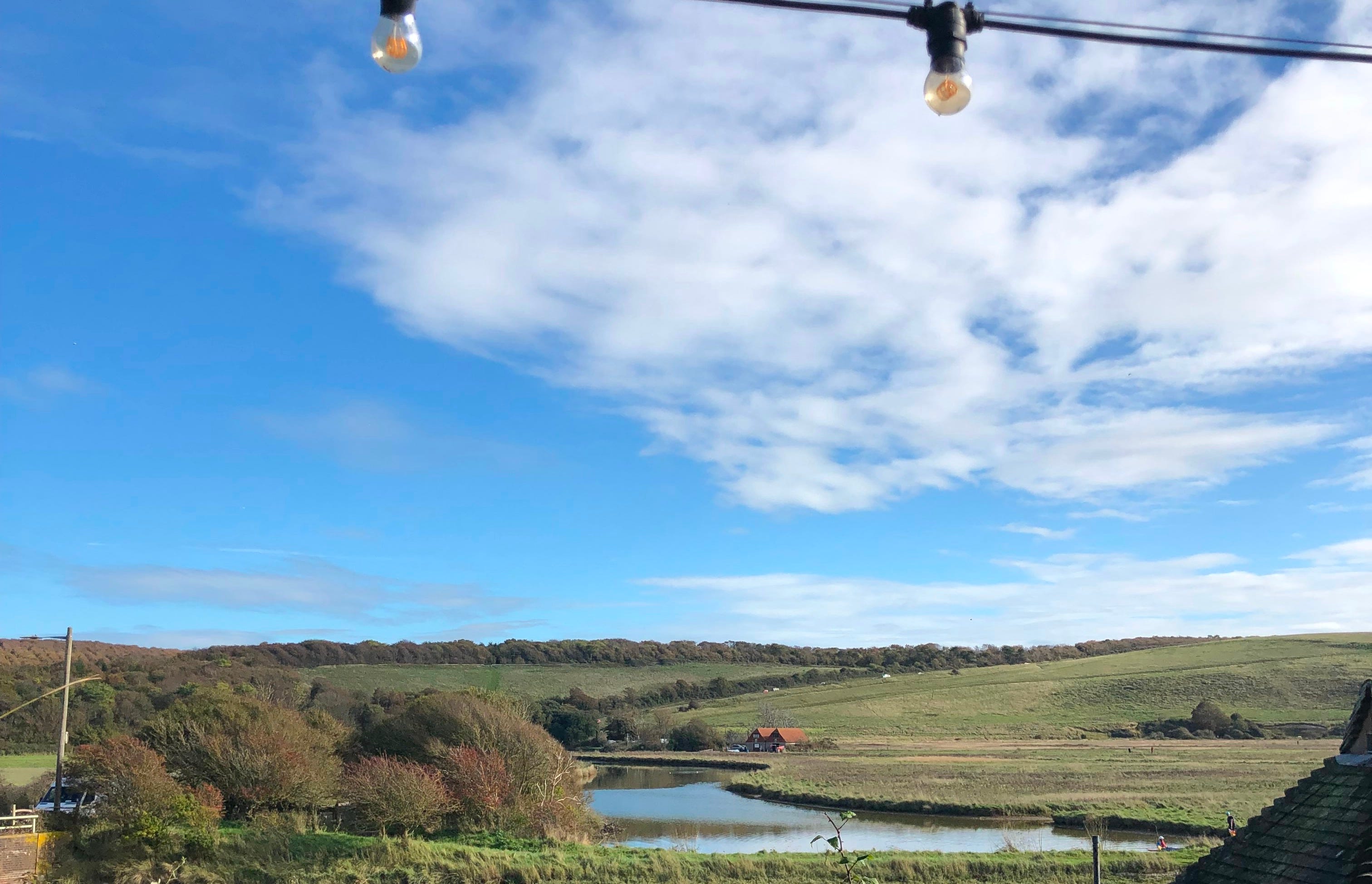
Introduction
Welcome to Issue Six of the Seaford Review. We really hope you like it.
Every time we start afresh with an issue, we set out to simply pick the poems we collectively agree are the best. We don’t have a theme or topic that we want to curate, nor are we necessarily looking for poems that speak to each other (in the first instance). But as soon as we start seeing the final selection, patterns emerge, and we’re always a little amazed at how certain ideas emerge as we curate the issue.
Maybe it’s a glut of summer poems, or maybe it’s because we’ve seen record heatwaves, but the more-than-human world suffuses this issue’s poems in ways that we did not notice until the shortlist was drawn up: whether that’s melting ice in Tom Nutting’s “Tipping points,” things washed up on the shore in Alice Murray’s “The thing that washed up on the beach,” or the “heterosexual soil” of Taylor Beidler’s “Divining Rod as Straight Culture.”
But there are also poems here about memory and identity: how the past impinges and shapes the present, be that the “sweetheart ring” in Suzie Coucher’s “Sweetheart,” or the legacy of religion in Finlay Worral’s “Pontifical.”
We end issue six on a fish tank and a poem we all instantly loved: “It’s remarkable / what a person can get used to,” Hewett’s speaker says. True, but these poems—and poetry in general—can unshake us from our habituations, from what we might be used to, or what we might expect from language and from the world. Poetry reminds us that everything, seen anew, is “remarkable.”
—Chris, Jack, Luís.
Table of Contents
Suzie Coucher
“Sweetheart”
Tom Nutting
“Tipping points”
“Alien”
Alice Murray
“The thing that washed up on the beach”
Meg Hemmings
“Rabbit paw”
Taylor Beidler
“Divining Rod as Straight Culture”
Finlay Worrallo
“Pontifical”
Sera Park
“New England fragments”
Beth Punnett
“Lunar New Year”
Kate Leah Hewett
“Aquatics company kid cleans clinic fishtank”
Suzie Coucher
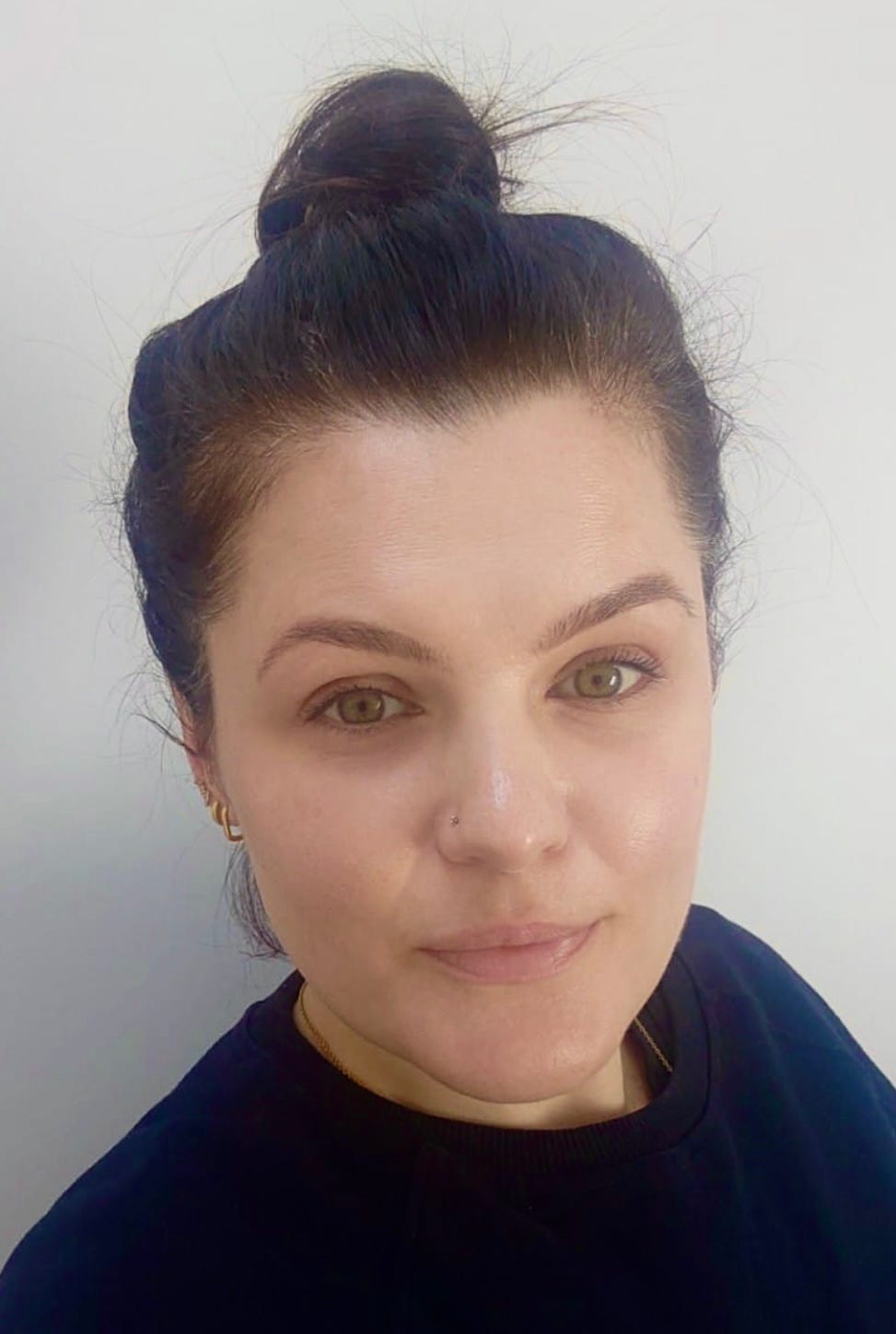
Suzie Coucher is a London-based poet from Yorkshire whose work explores family, memory and the body. She publishes on Substack at a sonnet for jane. You can also find Suzie on Instagram @suziejc_.
Sweetheart
I have your sweetheart ring.
Its tiny military wings; a promise.
Your passport photo lives in my wallet, your words
never stop learning in my head. I kept your letter —
the one that delivered news of my step-mother: the wicked witch
has flown off on a westerly wind. I traced the words into a sigil
burnt my fingertips in the process. Much good it did us.
He followed her there and was never seen again.
I bought a sweater vest to be just like you
often, I do the crossword; I hardly ever find the right words
eat the odd Eccles cake, even though the tangy fruit
makes me gip, visit Blind Jacks, drink where you
used to sit. I look at your old home on Rightmove
far more than I’d like to admit.
Tom Nutting
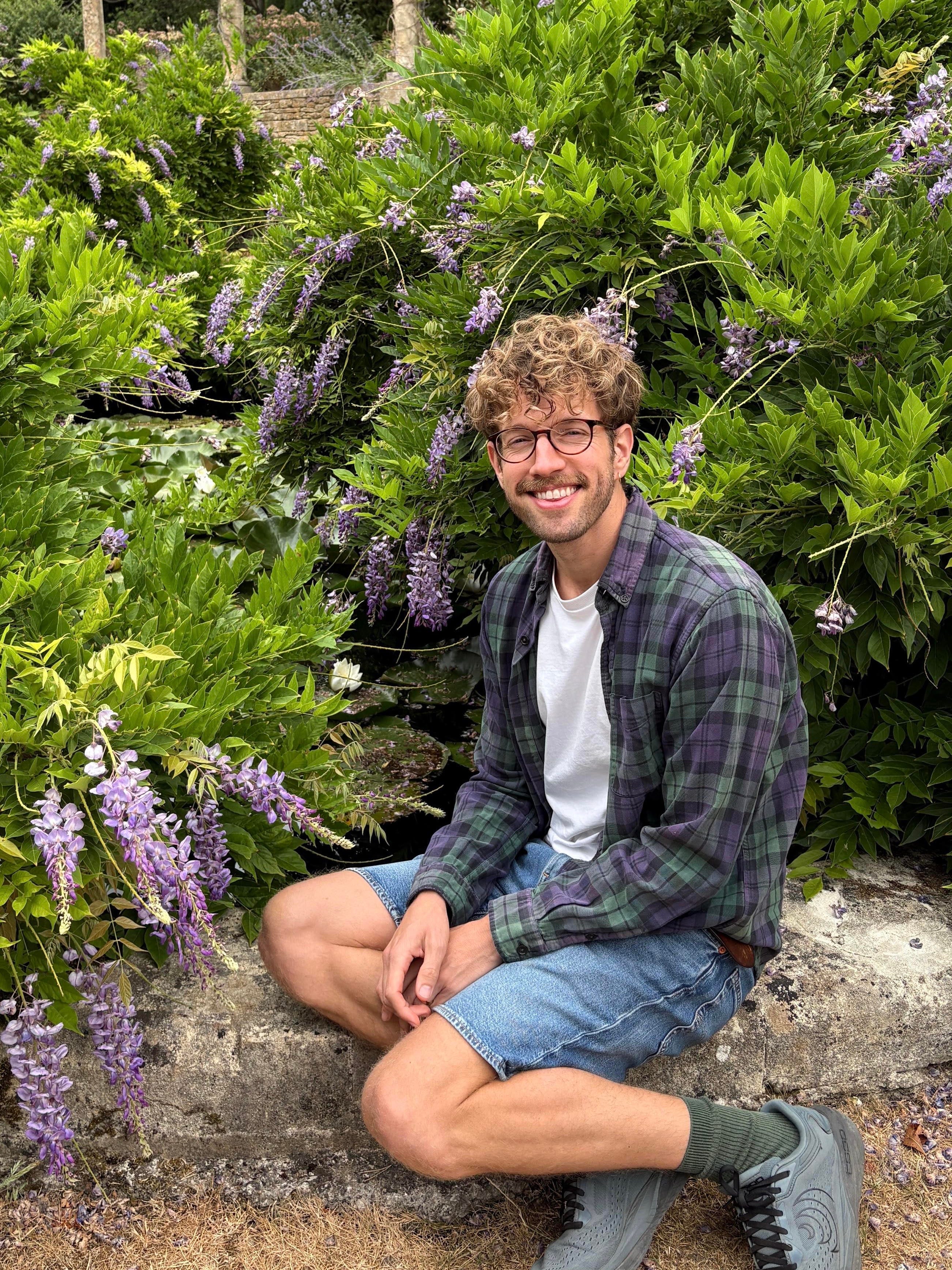
Tom Nutting (he/they) is a writer and psychiatrist in Bristol, UK. He writes on queer ecologies, activism and mental illness. He recently won a Rialto Nature and Place poetry prize. He has been shortlisted for the Starkie, MĀNOA and Aurora poetry prizes. His writing has appeared in The London Magazine, Magma, The Stinging Fly, fourteen poems, and elsewhere. He’s a contributing editor at Anteroom.
Tipping points
Greenland loses ice by the gigaton: albedo trick-
les out; earth drinks heat. Permafrost
hiccoughs methane, can’t stop now!
You measure it in ppm or hear it at night
when you cannot sleep. The Amazon flips
out too, no longer breathing, coughs carbon
through inside-out lungs, burnt alveolar stumps.
Antarctica vomits its cliffs into blue,
centuries at a time. AMOC slows, or reverses;
you notice it as attachment anxiety.
And the Bramble Cay melomys:
small russet rodent with a Roman nose
until the tide climbed into its burrows –
first to officially drown extinct in 2016.
Oh little melomys, forgive us, forgive me.
I have nothing but a poem, and a poem
cannot hold back water.
Alien
Alice Murray
Alice Murray is a poet and editorial assistant based in London. She holds an MA in Creative and Life Writing from Goldsmiths College. Her work has been published in Ink, Sweat & Tears, Bath Magg, and other publications. You can find her on Instagram: @alice_murray_poet.
The thing that washed up on the beach
had the face of a man I used to date.
Grey as a baffled celebrity,
it was cast forth onto the sand,
part-fish, with barnacles deep-set
as nails. Coral strewn upon
what seemed to be a chest
in oily modesty.
The sea has worn you out
and churned your horror dry.
The cold grimace of your body,
which spun us in a danse macabre
once, now chastened.
Limp.
I dare you try to stand.
You will encounter gravity.
I dare you try to speak.
You’ll find your words are salt.
Meg Hemmings
Meg Hemmings is a queer Australian writer based in London. She’s had memoir published by SBS Australia, and poetry published in Australian literary magazine, Meanjin. She was recently published in the latest anthology from Aftershock Review entitled, Dirty Laundry. She was also shortlisted for the Poetry London Apprenticeship Scheme last year which was judged by Pascale Petit.
Rabbit paw
I bet she looked beautiful / black dress hugging curves / her face lit up like a magic trick / I bet she looked beautiful / tethered / to audience / waiting for her to pull a rabbit from a hat / I bet she looked beautiful / with a silk scarf / half concealed / from her sleeve / ready to tighten frail necks / her doves clung to her breast / clawing at flesh for release / I bet she looked beautiful / her chest scratched and bloodied / like when she passed me the scared rabbit to hold / painfully raking its way to freedom / I bet she looked beautiful / wiping the blood from soft fat / metal in her mouth / her eyes alight with the feeling of being human / I bet she looked beautiful / when she announced her departure / the audience clapped / I heard after / I bet she looked beautiful / tethered and held / bag packed / rabbit / dove / scarf / mask / I bet she looked beautiful / when she turned her cheek / and her hem waved goodbye / I bet she looked beautiful / her face lit up like a magic trick.
Taylor Beidler
A byproduct of the American Midwest, Taylor Beidler is a London-based writer and archivist. They were the inaugural recipient of the UEA New Forms Award through the National Centre for Writing. They were recently longlisted for the Propel Cambridge 2026 Poetry Prize and shortlisted for the 2025/6 Derby Poetry Prize. Their collaborative poetry with composer Aliayta Foon-Dancoes was a part of Plastic Language x Tenement Press in 2024. A two-time Barbican Young Poet, they are currently a Creative Writing PhD candidate at the University of Essex.
Divining Rod as Straight Culture
Given men as they are, the trees surrender — Ben Lerner, ‘The Lichtenberg Figures’
In a monocropped countrywe plant seeds underneath our nail beds hide the chestnut in our womb
In this heterosexual soilthe land bleeds at right angleswash the pesticides down with another mother’s milk
In this nation’s bread basketI suck the pawpaw drytrace my tongue around the cherry stem forming a name learned by apple rind
Straight soil asks us to count the deerbut never the roadkillTo tan the hide and hide the flesh we leave three trees to remember the word forest
On sanded soil we kneelfinding less of ourselves in the land which was never our own
An Indigenous uprootingwe tear down timecondense the centuries with just enough leftover
to whittle through the weekendShaving our bellies down the redwoodI offer to carry your seed to queer the origins of our roots
Call them ash,call them sequoia,call them honey locust, twine the witch-hazel into a Y
hover it around the hollowed-out landuntil it concedes, limpleafed ready to plunder into creation-make
Inside three treesthere is a forestshadowed in pine: last of the unfettered land
Here the ground remainsplump to the touch,a lifetime’s lifetime of soft offerings and spoil
It is here I lay youto make kindling of the coordinatessuture the path clean, as if to say there is a better world, but it is not this.Finlay Worrallo
Finlay Worrallo is a queer cross-arts writer finishing up a Creative Writing MA at Newcastle University. His work is published in or upcoming in magazines such as Pennine Platform, Rust & Moth, Gutter, Magma and fourteen poems, and in the speculative fiction chapbook Unfurl: Portrait of Another World (The Braag, 2023).
Pontifical
A word used here to define a Catholic University: notas rigid a thing as it sounds. No forced mass, no incense
– nothing fixed but a cross on every classroom wall. I stammeredPortuguese while the Teacher watched me for four months,carved mouth closed. He did not whisper, who will you open
your mouth for? But as if he had, breath harsh on my neck
I found a party after class, under the September moon, and swappedtongues with a student (communication). He was full of words
tumbling out between moustache and beard – a burning bush.Christ is bearded in portraits, so kissing him on that first crossmight have felt like this. Pontifical can also stand
for the forming of bridges – so we built one
and he arched for me.Sera Park
Sera Park is a poet and anthropologist from South Korea, by way of the United States. Her work has appeared in Gutter. She lives in London, where she teaches anthropology.
New England fragments
I’ve been stitching together weak theories
about my Thelonius-Monk’s-grand-piano-
in-the-kitchen feeling, and I was thinking

of you, Ange. Remember me, practically
glued to your bean bag most of senior year?
Walking back to my room on the other side

of campus, past the dewy football field, a pond
no one cared to name, I remember wanting
more. To wake and wander before the fog

lifted for once. A plant or two to dote on,
furniture I could shuffle around. Is it ever
a good time to learn not everyone will commit

your name to memory? In a chapel where the pews
were arranged in such a way that everyone could see
everyone, they talked to us about grit: ritualized leaps

of faith. What did it make us privy to? We’d scoop
through snow in knee-high boots to the only business
in walking distance. Come back and find Sophie

asleep at her desk while the computer looped
a string of shows in her mother-tongue. She said
something about peace of mind. Outside the planetarium

in our prom dresses, we watched Boston’s skyscape
eddying on the Charles River. The dancefloor so far
behind us, drumbeats sounded like they were on stilts.Beth Punnett
Beth Punnett is a poet from West Sussex, in-between the hills and the sea. Her work has been featured by Verve Poetry Festival, Oblique House, and Seedlings, among others. She runs occasional workshops in London with Word Space (@wordspacepoems). You can find her on Instagram at @poetbeth.
Lunar New Year
We cling to her immigration status in Chinatown
as sweet lettuces are thrown out on their strings.
She turns each stranger to butter; in her shadow
I am sour, limp of wrist. The table wobbles,
prawn and pork dumpling heads everywhere –
the children we’ll never have. She folds
duck pancakes like linens out the dryer, catches
the slip of cucumber between her teeth.
Pretends to look away when chilli oil runs down
my chin, as if intruding on a late awakening.
Widens her eyes as though she believes heaven
is a part of living. Makes me think of her
at the Easter table, a distant cousin’s wedding,
meeting our mothers for tax-avoidant coffee
where I will shrink myself down to a sugar packet
and get lost in the pocket of her jeans.
Kate Leah Hewett
Kate Leah Hewett (she/her) is a poet, writer, cultural worker, gardener and occasional DJ. She lives on the edge of the Peak District with her wife and daughter. Her work has been published in Kym Deyn’s Carmen Et Error, Ink Sweat & Tears, Catherine Redford’s Dust Poetry, Queerlings, Sinister Wisdom, and elsewhere. She has performed in Yorkshire, New York and on Basilica SoundScape’s Poet Trolley, and has collaborated with musicians including Harkin and Tim Mislock. Hire her to DJ your gay wedding at https://www.handmirror.online
Aquatics company kid cleans clinic fishtank
On slate grey chairs, taut expressions watch the kid.
He is a kid, is a teenager, is maybe twenty-four
in overalls and gloves to the elbow. A new fish
still inside its polythene bag
is dropped into the tank.
This way, the internal temperature increases
so slowly that the fish won’t even notice.
It is important to adjust gradually.
Can it be true what they say? That we know
more about outer space than about the deep sea beds?
Between the reeds and the fish, there is perpetual motion
and of course it soothes. White noise
bubbles of the filter. A reminder that outside
of this place with its coffee machine and its wall
of leaflets are whole universes. And yet, it’s not easy.
To shake the feeling of being in the centre of a star.
On the chairs, imagined futures are bright
pebbles in the mind. Days become a dance
of hormones and follicles. Sharps bins
sit on top of microwaves. It’s remarkable
what a person can get used to.
So many incredible poets in this collection 💖
Stunning collection 💛