

Introduction
Welcome to Issue 5 of Seaford Review, featuring poetry and poets from around the world. As usual, we’ve had a wonderful time reading all the submissions we’ve received: we’re always astonished by the range of formal experimentation, voice, and concerns expressed in the poems we receive. It’s a real privilege to be trusted with work that is so fresh and varied and vulnerable.
Nevertheless, as we go through the process of selecting poems which make into the issue, we’re often surprised to see a theme or themes emerge. It seems fitting that, as spring finally seems to be arriving in the UK, our current issue contains so many poems touching on youth — Steven Green’s A/S/L or Conrad Rayner’s Everybody’s baby come to mind — and change — see Amy L. King’s IT WAS THE SUMMER OF MY 27TH YEAR. The poets in this issue are writing deeply into the present moment, from Claire Sosienski Smith’s angsty, “generation rent” poem THE BATHROOM to Deron Eckert’s humorous and acerbic take on AI. Alison Clara Tan’s unsettling Broken Pantoum in Horses and Wave Interference shows us how established forms can be remade to speak to a world which every day seems to be increasingly uncertain, fragmentary, and disturbed.
We hope you enjoy reading these poems as much as we did. Please spread the word — let us know which poems you enjoyed, and why! — and share the issue with friends and family. From the editors at Seaford Review, we wish you all a comfortable and settled start to April.
— Chris, Luís, Jack
Table of contents
Steven Green
A/S/L
Ellora Sutton
I want to be your girl
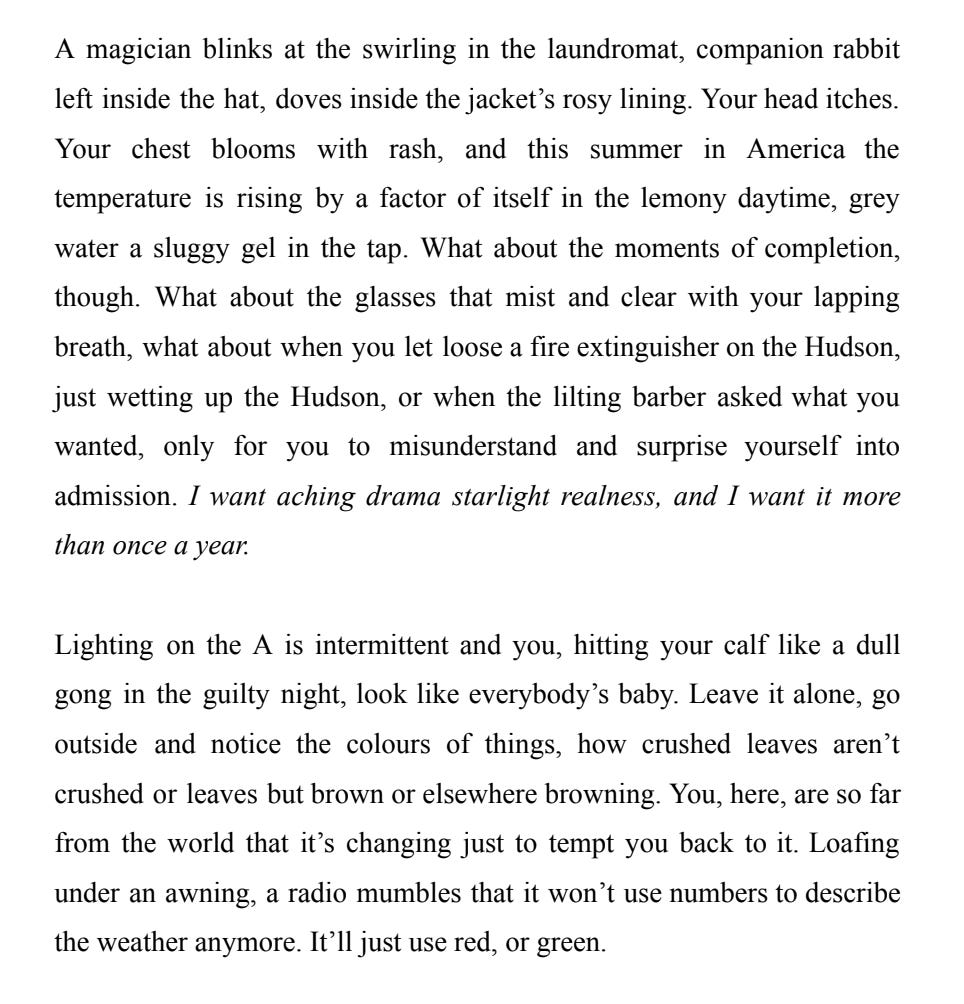
Conrad Rayner
Everybody’s baby
Amy L. King
IT WAS THE SUMMER OF MY 27TH YEAR
Francis-Xavier Mukiibi
You Show Me How to Peel Lychees
Claire Sosienski Smith
THE BATHROOM
Alison Clara Tan
Essay on Rage
Broken Pantoum in Horses and Wave Interference
Deron Eckert
The AI Slop Winter Village Displayed
Steven Green
Steven Green is a London-based poet from Birmingham. His work has appeared in the likes of Bruiser, Clarion and Gold Dust Mag as well as in anthologies from Broken Sleep Books and Morocco Bound. He is currently working on his first pamphlet.
A/S/L
It’s the only chance you get
to know you’ve been seen.
You have to log in and out
and again. My friends use
icons to draw elaborate pictures
with their screennames,
accompanied with song lyrics
from an older brother’s
record collection. I attempt
symmetry like I’m a blind sculptor
asked to make a face
with as many straight lines as possible.
I like big blocks of text.
I like tying up the billpayer’s
phoneline. You can tell me
anything, up late bathing
in the blue aurora of the screen.
One night i got bounced
from a chatroom for laughing
at a guy who asked if we have
any Barenaked Ladies fans
in the house. Not cool, dude.
I went into another one
and pretended to be a girl.
A man in Chicago asked
if I’d shave my pubes
and mail them to him.
He’d cover postage, and throw
a few bucks my way,
show me a real good time,
typing out my name
with his whole mouth.
Ellora Sutton
Ellora Sutton is a poet and PhD student based in Hampshire. Her work has been published in Magma, The Poetry Review, Oxford Poetry, etc. and she is the poetry reviewer for Mslexia. Her debut collection, Little Bitch, is published by Verve Poetry Press in April 2026.
I want to be your girl
Use me
like a spit-valve,
empty me of all thought—
I mean—
treat me, allow me
to function
as the spit-valve
affixed to your day’s long tuneless
crowbar. Fill me
with your guts, your froth,
your offal, your pips and stones,
your phlegm and knucklebones,
your screwed-up pages and hot glue.
That fishbone you almost choked on at lunch—
slip it down behind my eye, beneath my eyelid
like a note, a key. The meat you won’t touch
because you can hear it
and it sounds like a filthy machine.
The wetness of it
is my wetness, my deep wage
of spit.

               /

                          Flush the beautiful night
                          from my throat
                          like an unscathed bird.
                          Marvel at my breathing.
                          Breathe with me.
Stroke my hair.Conrad Rayner
Conrad Rayner is a poet and facilitator from London. Recent works feature in Bash Magazine, the Resonance Anthologies 2025 and 2026, and with The Fool’s Press. They have hosted workshops with a range of collaborators, including arts supperclub When They Meet and Resonance Poetry. They are currently working toward a debut pamphlet, and in the final stretch of BA in Creative Writing at Goldsmiths, University of London. They are currently working toward a debut pamphlet, and are an upcoming writer-in-residence at Shakespeare and Company, Paris.

Everybody’s baby
Amy L. King
Amy L. King is a poet and writer living in Manchester. She won the inaugural Derby Poetry Festival prize in 2023 and was longlisted for the Aurora Prize in 2025. Her work can be found in Magma, fourteen poems, Under the Radar, Dust poetry, DIVA magazine and elsewhere.
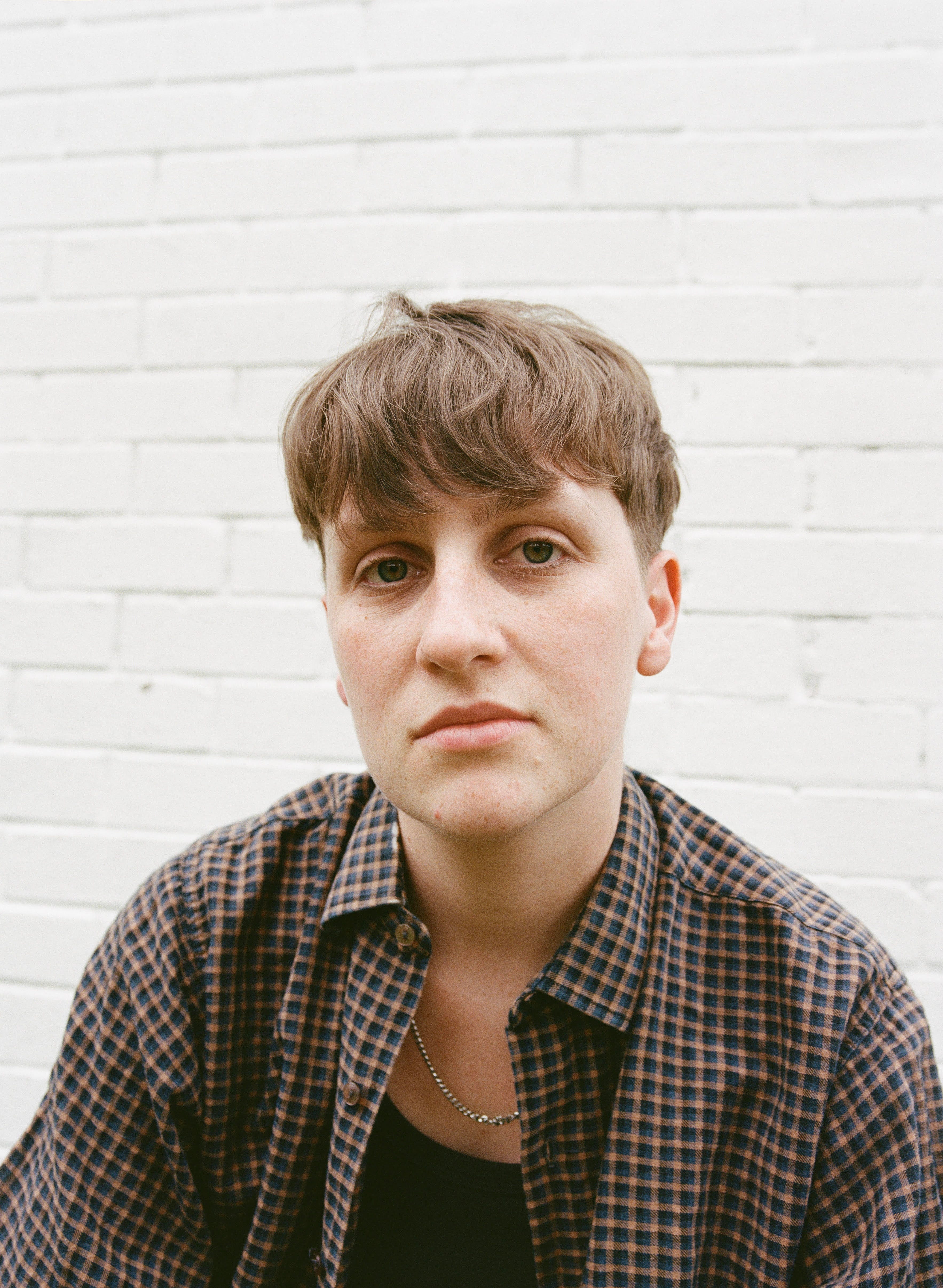
IT WAS THE SUMMER OF MY 27TH YEAR
and everyone I loved upped sticks for London.
I got to bleaching their skirting boards,
rehoming baby spider plants, demolishing
the knock-off Cornettos in the freezer. June was a chorus
of van doors slamming shut. It was a season of change
and I bore it like a raging sunburn; peels of me
flaking like confetti in the gutter. Someone always
had a tennis ball, a tinny speaker. The stink
of freshly cut grass, a cheap candle with an endless wick.
One morning, my landlord cut a hole in the wall
and the rats finally spilled out. I laughed a lot
that July. Slept in the garden on an old bed sheet,
lived off crisps, dips and cheap larger
someone else was buying. There must have been times
I wobbled: a sad picnic table on its last
rotted legs. But there was always a woman
who knew the best spot for a wild swim, drove
a beat-up car, had nowhere else to be. The city
was one giant smoking area with a new friend
down every alley. I kept promising to visit
my parents, give blood before the next tattoo.
Things were fine! The rain understood
when to take a month off. I started flossing before bed,
telling anyone who would listen best August
of my life, waiting for the leaves to crisp, the balmy
relief of an early night. What happened to the delicious
joy of waking on each other’s sofa.
Keeper of the spare key. By September, their texts
arrived, swearing it’s not the same without you,
someday, they’d come back.
Francis-Xavier Mukiibi
Francis-Xavier Mukiibi is a poet of Ugandan heritage from North London. He was the recipient of an Eric Gregory Award for his debut pamphlet, Mutabani & [ ]ther Poems (Little Betty, 2025), and won Silver in the Creative Future Writers’ Award for 2024. His poems appear in Under the Radar, Propel, Magma, and Poetry London, among others.
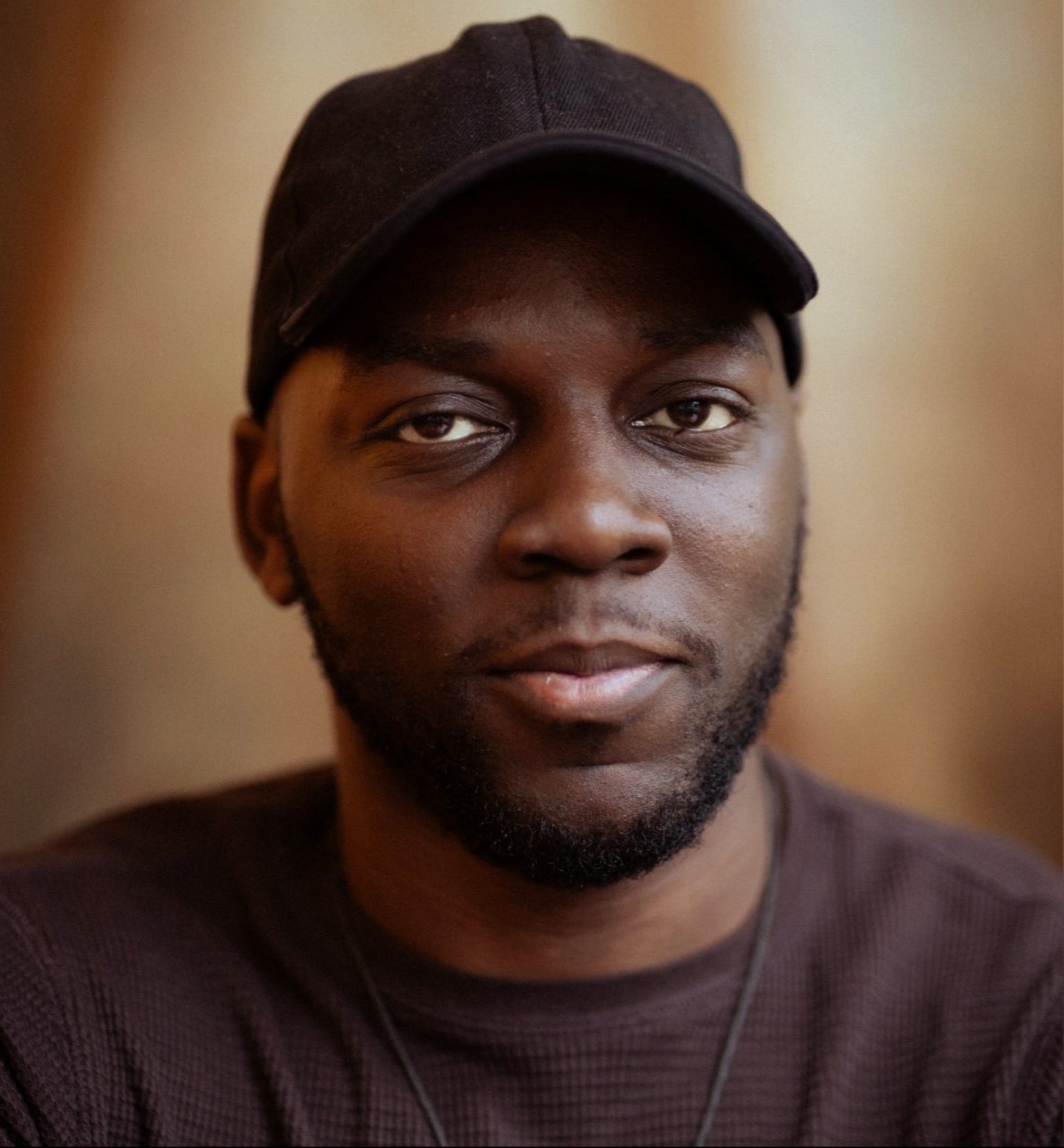
You Show Me How To Peel Lychees
In the kitchen, lychees coddled
between thumbs on the island, a cloth
of breeze through a crack. Above us,
a pendant lightens the fruit, an arrow
to the spot where bark skin hues
closer to bright pink than brown. This
is where a lychee feels raw, a soul
before it hooks onto body: boneless, moist
beneath the shell. You dig a fingernail
through the rough. How thick it sits
on the flesh, a cuddle of humps unwilling
to be breached. You’ve mastered this, nail
cleaving like a gust through foam. Mine,
too bitten, blunt. Next to your hand,
a plastic bowl fills with them, undressed,
slick, honey-glistening on the bulbs.
Same way light catches your corner white
eyeing my modest attempts—a mixture of
play, of pity. Does this get easier in time?
Every peel, flesh with permission to feel
the first lick of our breath.
Claire Sosienski Smith
Claire Sosienski Smith is a poet based in South East London. They are a part of Resonance Poetry Collective, a queer-led collective that puts on free events in and around Peckham, who are one of the current collectives in residence at the Goldsmiths Centre for Contemporary Art. Claire’s work has most recently been published by 14 poems, discount guillotine, and eff-able: a spicy anthology of queer crip poetry.

THE BATHROOM
The bathroom swallows everything I give it.
Here is the flush that unspins its way beneath
the street, the plughole and its metal breath,
fluent in dust and bones and all things.

Is the entire world my bathroom? Is everything
a commode if you're creative enough?

Sarah says a house built in the sixties is best,
wants to live somewhere designed for people
with access to birth control, quality psychedelics,
quaaludes and good weed.

I am keeping myself in cycles of clean and unclean,
patient as I wait to unfold myself into a bath. I am a
prehistoric fern, an outstretched hand, the raspberry
fruit roll-up I take from my pocket and offer to you.
You place it under your pillow.

Through the cracks in your sleep, you say:
harbour      linen     linoleum
wavy    leaf       livered

And I am overtaken with an urge to touch your lips
as if I could hold open the words and climb inside.
Alison Clara Tan
Alison Clara Tan is a Southeast Asian writer based in London. Her poetry appears or is forthcoming in fourteen poems, wildness, The Kenyon Review, Gutter Magazine and Washington Square Review, among others. She is a Barbican Young Poet, a Brooklyn Poets Fellow, a member of the London Writers Centre's Poetics Lab 2025, and has been a resident artist at the Hawkwood Centre for Future Thinking.
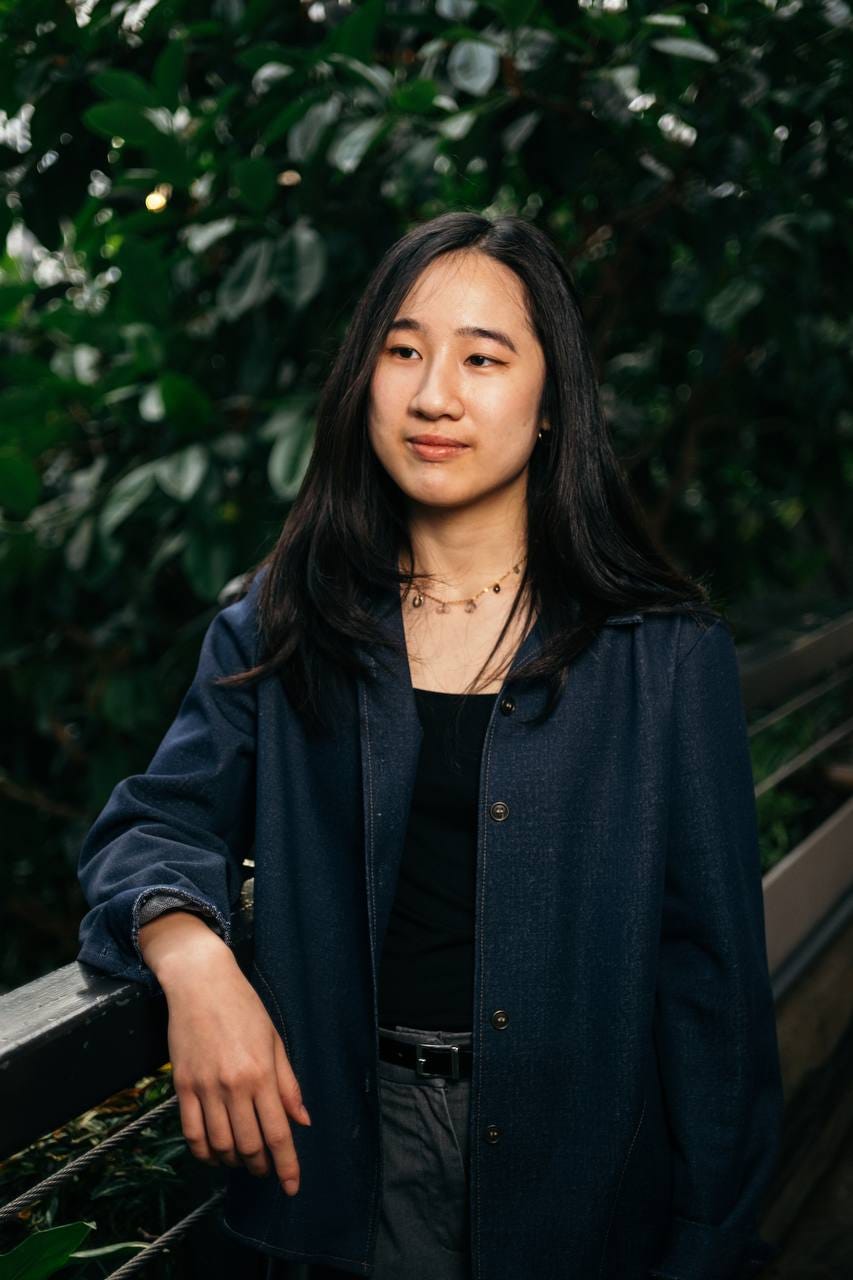
Essay on Rage
I’m no saint / I was up
all night breaking a heart,
killing a man / I walked
with feet backwards /
wasted hours brushing
away / this madness / three
burnt leaves from the
windowsill / I was up
all night / calling birds
of prey from a shameful
sky / my vision blinded
by white wings / slicing
across terrified glass /
but love me / anyway /
toss kisses down
the oubliette / bind
my tiny hands / fast
of the butcher’s blade /
turn, now / watch me
shadowbox bruises,
breathing / say Alison /
why say such terrible
things / I wanted only
to hold you.
Broken Pantoum in Horses and Wave Interference
—for Joshua

                                    Iceland trains horses to write out-of-office emails.
                                                    —NZ Herald, 29 Jan 2024

Did it hit you like a truck
when you woke up? Horses in Iceland
can write your out-of-office emails. Instead
of wearing your keyboard
as a fashion noose
what good is all
your pride—what can it do,
When horses in Iceland can write.
You’re either lonely or don’t know how lonely you are.
So what good is all your pride? What can it do
though the consequences
aren’t predefined
of being lonely
and knowing how lonely
we are. If Wave 1 is my energy and Wave 2 yours, the consequences
aren’t predefined. Such is the corollary
of a subtle mind.
If Wave 1 is my energy
and Wave 2 yours
they’re both constructive
and destructive sometimes. Such
are the corollaries
of two subtle minds where
one writes poems, and one codes.
We’re both constructive. Destructive,
sometimes—like the stupidity of
a miscalculated joke. That’s why I write poems, and you code
the split between sympathy
and empathy when you’ve been
stupid, miscalculated your joke. If I slow
down and just
imagine it: the split between sympathy
and empathy
is being understood. As
to understand—
slow down. Just imagine it: horses sliding
down fjords in the light of being understood,
as to understand. Graze factors
with me in Iceland.
Deron Eckert
Deron Eckert is a Pushcart-nominated poet and writer who lives in Lexington, Kentucky. His work has appeared or is forthcoming in Appalachian Review, Atlanta Review, Wild Roof Journal, Blue Mountain Review, Rattle, Stanchion, The Fourth River, and elsewhere. He can be found on Instagram at deroneckert.
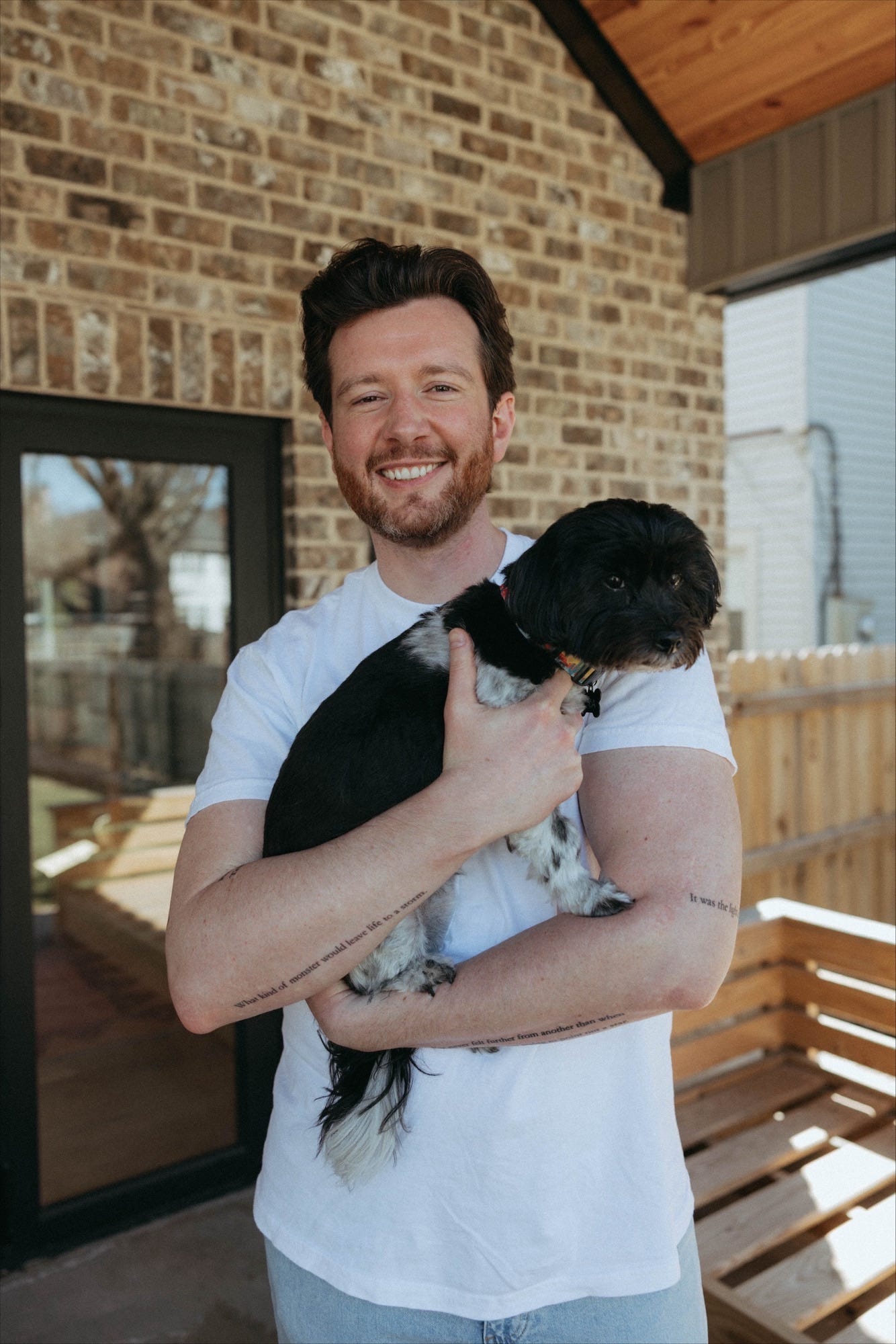
The AI Slop Winter Village Displayed
generates milquetoast holly jolly jazz to lull us
into complacency—a term typically used to describe
anything we have grown accustomed to hearing or seeing
—albeit slightly askew and cut short by the loop.
Then, there are the spines of pageless books—
unless you count the marshmallow-like blocks wedged
between the covers as pages—stacked to the ceiling
of every window in the square no matter whether
they’re windows in a café, apartment, or patio-facing bar
that appears to serve only marshmallow-stuffed books
along with a handful of muffins without a single spirit
or person in sight, as if we are being reminded by a program
that once we are all gone, the only thing left of us will be
stale baked goods and the words we left on the page,
and even those can be kneaded away. But the music is fine
enough for the dogs to listen to while we are away.
Studies say they like to hear music more than voices,
and our pups will not even glance at the screen anyway.
They have too large of a window to an outside world
that consistently reveals too many real scurrying chipmunks
and skulking stray cats to get lost in the discrepancies
of something so worthless to anything living as a fake
reality playing background music over a twelve-hour
snow shower that never accumulates to anything
worth fussing about longer than the time it takes me
to lace up my weathered brown leather shoes and bid
the pups adieu with the reminder you and I will return soon
and the assurance that we are not going anywhere,
especially this wonderlessland even dogs don’t like,
which does nothing for me either on my way out the door
other than bring to the surface a deeply rooted acorn
of grandparent-to-grandchild advice that has grown into
such an established white oak in the recesses of my mind
that it could now be chopped down, charred, and shaped into
a barrel brimming with barrel-proof bourbon meant to be
taken straight: Never trust a thing a dog doesn’t like.